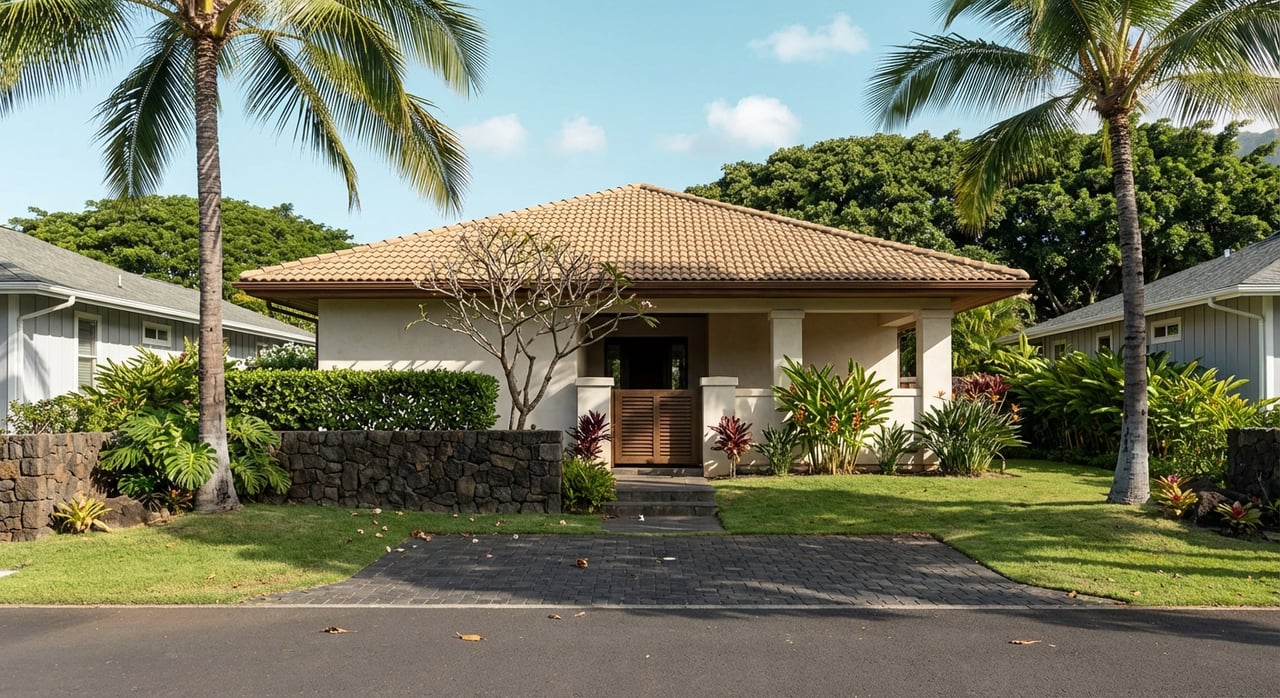
Thinking about a home in Kaiminani and wondering what the HOA fee actually pays for? You are not alone. In West Hawai‘i, climate, community design, and association rules all shape how much you pay and what you get in return. In this guide, you will learn what HOA fees typically cover in Kaiminani-area communities, how CC&Rs influence upkeep and improvements, and how to budget confidently as you compare neighborhoods in 96740. Let’s dive in.
How HOAs work in Kaiminani
Kaiminani sits within Kailua-Kona’s 96740 area, where you will find a mix of single-family subdivisions, condo or townhome communities, and larger master-planned neighborhoods. HOA structures vary. Some cover only shared landscaping and roads, while others include exterior building care and amenities.
HOAs are either self-managed by a volunteer board or professionally managed by an association management company. Professional management often adds administrative costs, but you may see smoother accounting and consistent reporting.
Local conditions matter. Salt air, humidity, and termite pressure can speed up exterior wear and increase pest control needs. If the community maintains private roads or drainage systems, that adds recurring costs to the HOA budget.
Rules and documents guide everything. CC&Rs, bylaws, and rules are recorded and enforceable. County and state regulations can also affect rentals and improvements, so you should review association documents alongside local requirements.
What HOA fees usually cover
Your monthly fee is pooled to fund shared services, long-term reserves, and administration. Exact coverage depends on your community type and amenities.
Common categories in Kaiminani-area associations:
- Common-area landscaping and irrigation for entries, medians, and parks
- Exterior common-area maintenance, including private roads, sidewalks, lighting, and mail kiosks
- Building exterior care in condo and townhome communities, such as roofs, painting, siding, decks, and window or balcony upkeep
- Termite monitoring or treatments and broader pest control needs
- Utilities for common areas, including irrigation water and lighting
- Trash and recycling for common areas, and sometimes unit service if included
- Master insurance for common elements, plus liability coverage
- Reserve fund contributions for future big-ticket items like roofing, paving, and painting
- Professional management, accounting, legal, and administrative costs
- Security and amenity operations, such as gates, pool or spa care, clubhouse and fitness spaces
- Regulatory compliance, including drainage upgrades or required signage
- Special services in some communities, such as bulk cable or Internet
In West Hawai‘i, expect higher line-items for exterior upkeep and termite control. Fees may rise if the HOA maintains private infrastructure or offers staffed amenities.
How CC&Rs shape costs and projects
CC&Rs are the blueprint for who maintains what and how improvements happen. Understanding them helps you predict your monthly and long-term costs.
Maintenance responsibilities
CC&Rs specify whether the HOA or the owner maintains roofs, exterior paint, lot landscaping, fences, and driveways. In single-family subdivisions, you often handle your own lot maintenance. In condo or townhome associations, exterior building care is usually association-managed.
Reserves and special assessments
Associations collect reserves for long-term capital projects. Strong reserves reduce the chance of special assessments. If reserves are weak or a large repair is overdue, you may see higher fees or a special assessment to catch up.
Architectural controls and approvals
Most CC&Rs require approval from an Architectural Review Committee for exterior changes, including paint colors, fencing, solar panels, lanais, and additions. The process and standards can affect timelines and costs, so plan ahead.
Rental and short-term rental rules
Some associations permit rentals with limits, while others restrict or prohibit short-term vacation rentals. Rules can affect income potential and neighborhood character. Review both CC&Rs and local regulations.
Voting, amendments, and enforcement
Amending CC&Rs usually requires a supermajority vote and recorded changes. Boards have enforcement tools, including fines and lien rights. Active enforcement can support community standards, but it can also increase legal costs if disputes arise.
Budgeting and comparing neighborhoods
A smart plan looks at the HOA fee and everything that sits next to it. Use the steps below as your due diligence checklist.
Documents to request before you buy
- Current HOA budget and recent financial statements
- Reserve study or policy, plus current reserve balances
- CC&Rs, bylaws, house rules, and architectural guidelines
- Board and membership meeting minutes for the last 12 to 24 months
- Master insurance declarations, including coverages and deductibles
- Management contract and contact information
- List of recent or pending special assessments, litigation, or code issues
- Recent capital projects and planned improvements
Financial health indicators to review
- Reserve funding, matched to the age and condition of roofs, paving, and critical systems
- Special assessment history and frequency n- Annual fee increases over the last few years
- Owner delinquency rate, which can signal future assessments if high
- Ongoing litigation or large claims that could lead to levies
Total monthly cost checklist for 96740
Build a side-by-side comparison across any homes you are considering:
- Monthly HOA fee and a list of what it includes
- Typical annual HOA increase percentage
- Special assessments, converted to a monthly equivalent
- Property tax category for your use, primary residence or investment
- Homeowner insurance, HO-6 for condos or HO-3 for houses
- Utilities, including electricity, water or sewer, and trash
- Pest control for termites if not covered by the HOA
- Amenities and management type, since both influence fees over time
Typical fee ranges, not community-specific
- Small single-family lot HOA with basic landscaping, generally tens to low hundreds per month
- Condo or townhome associations that include exterior maintenance, often in the hundreds per month
- Resort or master-planned communities with gates and amenities, several hundred to over a thousand per month
Exact figures vary by community and must be confirmed with the latest HOA statements.
Hawai‘i-specific considerations
- Climate-driven maintenance can shorten roof and paint cycles and increase corrosion risk
- Insurance costs and deductibles may be higher, especially for wind or storm coverage
- Water and wastewater systems vary, including private septic in some areas, which can shift costs between owners and associations
- Rental regulations may add compliance costs and influence investment returns
Smart questions to ask the HOA
- What exactly does the monthly fee cover, and what is paid by owners directly?
- What is the current reserve balance, and what does the latest reserve study recommend?
- Are any special assessments planned or recently completed, and what are the amounts and timelines?
- What are the rules on rentals, including short-term vacation rentals?
- Who manages the association, and what is the term of the management contract?
- Is the association involved in litigation or major claims?
- What has been the annual percentage increase in fees for the last three years?
- What coverages and deductibles are on the master insurance policy, and how are loss assessments handled?
- What capital projects are planned in the next 12 to 36 months?
Next steps
If you are comparing Kaiminani to other West Hawai‘i neighborhoods, the best move is to gather the right documents, check reserve strength, and map your total carrying costs. A clear, apples-to-apples view helps you avoid surprises and pick the community that fits your lifestyle and budget.
If you want help requesting HOA packets, reading budgets and reserves, or aligning CC&Rs with your plans, we are here for you. Connect with Team Kuessner Davis for a calm, concierge approach from local experts who understand Kona’s neighborhoods and how HOAs really work.
FAQs
What do HOA fees cover in Kaiminani 96740?
- Fees typically fund common-area landscaping and maintenance, exterior care in condo or townhome settings, utilities for shared areas, master insurance, reserves, management, and amenities where offered.
How do CC&Rs affect my upkeep costs?
- CC&Rs assign responsibility for items like roofs, exterior paint, lot landscaping, and fences, which determines what you pay directly versus what the association covers.
What is a reserve study and why does it matter?
- A reserve study estimates future capital repairs and the savings needed, and stronger reserves lower the risk of special assessments hitting your budget.
Are short-term vacation rentals allowed in Kaiminani communities?
- It depends on each association’s CC&Rs and local rules, so review rental policies and county requirements before you buy if rental income is part of your plan.
How do Hawai‘i’s climate and location affect HOA budgets?
- Salt air, humidity, and termite pressure increase exterior maintenance and pest control costs, and coastal exposure can influence insurance premiums and deductibles.
What should I look for in HOA financials before purchasing?
- Review current budgets and financials, reserve balances and studies, fee increase trends, special assessment history, delinquency rates, and any litigation or large claims.